NGC 6401
NGC 6401 is a globular cluster in the constellation Ophiuchus, magnitude 9.4, 4.5′ across.
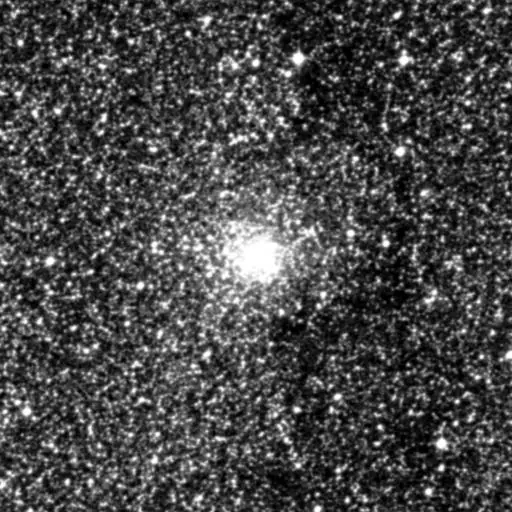
An ancient globular cluster near the galaxy’s centre, mistaken for a nebula by two Herschels.
William Herschel found it in 1784 and filed it as a bright nebula. His son John came to the same verdict: their telescopes could not split the glow into stars. NGC 6401 is in fact a globular cluster about 13 billion years old, orbiting in the bulge at the heart of the Milky Way.
It is massive enough that it may be trapped in the galaxy’s central bar. Seen from Earth it lies only a few degrees from the Galactic Centre, and thick dust reddens its light.
NGC 6401 is 24,000 light-years away: the light we see from it set off about 24,000 years ago, when the last Ice Age was at its height, and mammoths roamed beneath the ice sheets.
Did you know?
- Hidden by an eclipsed Moon. During the total lunar eclipse of 15 June 2011, the darkened Moon passed in front of NGC 6401 as seen from Europe, North Africa and south-west Asia. It will happen again during the eclipse of June 2076.
How big is it?
About 120,000 Suns’ worth of stars in a ball 31 light-years wide. Light itself takes 31 years to cross it. That’s 7.4 times the distance from the Sun to the nearest star. In its core the stars are packed so tightly that each one’s nearest neighbour is about 32 light-days away. Our nearest neighbour, Proxima Centauri, is 4.2 light-years from the Sun — 48 times farther. To break free from its centre, a star would need 24 km/s — 2.1 times the speed a rocket needs to leave Earth. The Milky Way’s tides will pull it apart in about 1.8 billion years. Shrink our Solar System — the Sun and all eight planets — to the size of a coin, and NGC 6401 would be 793 m across (8 football pitches end to end); the nearest star would be a football pitch away, and the Milky Way 2,520 km across.
A 9.4-magnitude globular cluster in Ophiuchus, about 4.5′ across. It lies about 24,000 light-years away.
When and where to see it
It is best placed in the evening sky around July, when it crosses the meridian at about 10 pm local time (around midnight in June). It can be seen from everywhere south of 66°N and never sets south of 66°S.
At its highest it stands 16° up from 50°N, 31° up from 35°N, 66° up from the equator, 79° up from 35°S.
Facts
- Type
- Globular cluster
- Constellation
- Ophiuchus
- Designations
- NGC 6401
- Magnitude
- 9.4
- Apparent size
- 4.5′
- Position
- RA 17h 38.6m, Dec −23° 55′ (J2000)
- Distance
- 24,000 light-years
- Discovered
- William Herschel, 1784
Open AstroPilot to see when NGC 6401 is highest tonight from your location, how easy it is with your telescope or binoculars, and an eyepiece view.