NGC 6790
NGC 6790 is a planetary nebula in the constellation Aquila, magnitude 10.5, 7″ across.
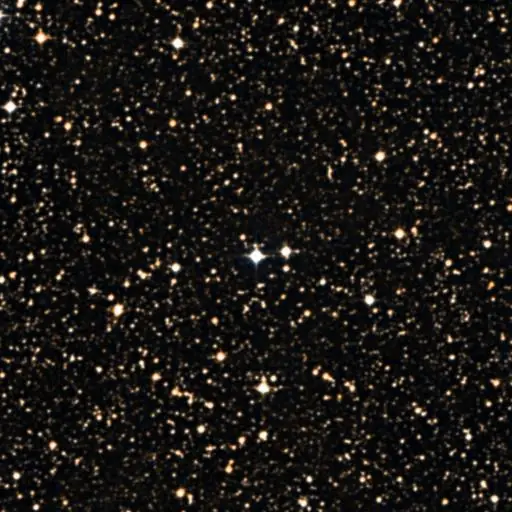
A young planetary nebula whose star began life much like the Sun — a preview of our own fate.
Some five billion years from now, the Sun will do what the star in NGC 6790 has recently done. That star began life with about the Sun’s mass. After swelling into a giant it shed its outer layers, and what remains is a white dwarf of about 0.6 Suns, with a surface near 73,500 degrees.
The planetary nebula it lights is young, roughly 6,000 years old, and still compact and bright. Hubble images show elongated shells of gas around the central star.
NGC 6790 is 13,000 light-years away: the light we see from it set off about 13,000 years ago, when the last Ice Age was ending.
How big is it?
477 Solar Systems side by side. Light itself takes 5 months to cross it. Shrink our Solar System — the Sun and all eight planets — to the size of a coin, and NGC 6790 would be 11.5 m across (about the length of a bus); the nearest star would be a football pitch away, and the Milky Way 2,520 km across.
A 10.5-magnitude planetary nebula in Aquila, about 7″ across. Its central star is magnitude 11.1 (B-band).
When and where to see it
It is best placed in the evening sky around August, when it crosses the meridian at about 10 pm local time (around midnight in July). It can be seen from everywhere north of 88°S and never sets north of 88°N.
At its highest it stands 42° up from 50°N, 57° up from 35°N, 88° up from the equator, 53° up from 35°S.
Facts
- Type
- Planetary nebula
- Constellation
- Aquila
- Designations
- NGC 6790
- Magnitude
- 10.5
- Apparent size
- 7″
- Position
- RA 19h 23.0m, Dec +1° 31′ (J2000)
- Distance
- 13,000 light-years
- Discovered
- Edward Charles Pickering, 1882
Open AstroPilot to see when NGC 6790 is highest tonight from your location, how easy it is with your telescope or binoculars, and an eyepiece view.