Phantom Streak Nebula (NGC 6741)
Phantom Streak Nebula (NGC 6741) is a planetary nebula in the constellation Aquila, magnitude 11.5, 8″ across.
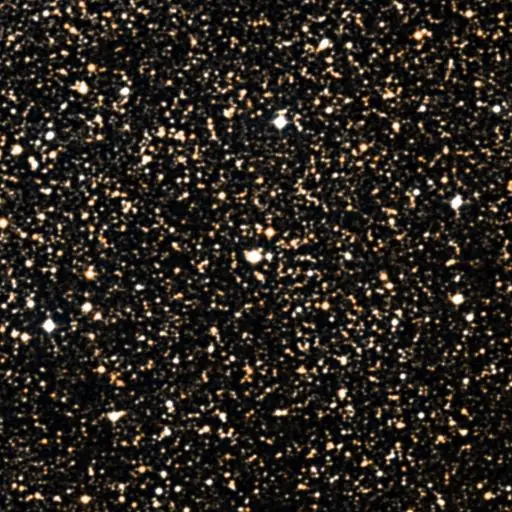
A small, bright planetary nebula that slipped past the great sky surveyors until 1882.
The Herschels swept the skies for nebulae, yet NGC 6741 slipped past them. Bright but tiny, it was easy to overlook, and it was only spotted in 1882, by Edward Pickering.
It is a planetary nebula — a misleading name, coined because such round shells reminded early observers of the discs of the giant planets. In fact it is the cast-off outer layers of a dying star, glowing in the light of the hot core left behind.
Phantom Streak Nebula (NGC 6741) is 12,000 light-years away: the light we see from it set off about 12,000 years ago, when the last Ice Age was ending.
How big is it?
477 Solar Systems side by side. Light itself takes 5 months to cross it. Shrink our Solar System — the Sun and all eight planets — to the size of a coin, and the Phantom Streak Nebula would be 11.5 m across (about the length of a bus); the nearest star would be a football pitch away, and the Milky Way 2,520 km across.
An 11.5-magnitude planetary nebula in Aquila, about 8″ across. Its central star is magnitude 20.3 (B-band).
When and where to see it
It is best placed in the evening sky around August, when it crosses the meridian at about 10 pm local time (around midnight in July). It sits on the celestial equator, so it can be seen from almost everywhere on Earth.
At its highest it stands 40° up from 50°N, 55° up from 35°N, 90° up from the equator, 55° up from 35°S.
Facts
- Type
- Planetary nebula
- Constellation
- Aquila
- Designations
- NGC 6741
- Magnitude
- 11.5
- Apparent size
- 8″
- Position
- RA 19h 2.6m, Dec −0° 27′ (J2000)
- Distance
- 12,000 light-years
- Discovered
- Edward Charles Pickering, 1882
Open AstroPilot to see when Phantom Streak Nebula (NGC 6741) is highest tonight from your location, how easy it is with your telescope or binoculars, and an eyepiece view.