NGC 6530 (Cr 362)
NGC 6530 (Cr 362) is a cluster + nebula in the constellation Sagittarius, magnitude 4.6, 6.0′ across.
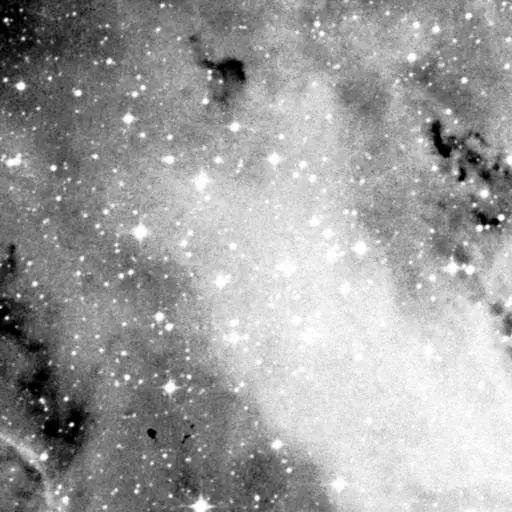
The newborn star cluster inside the Lagoon Nebula — most of its stars only a million or two years old.
Most of the stars in NGC 6530 are babies. Star formation in this open cluster began up to 15 million years ago, but the bulk of its members formed within the last one or two million years, near its centre. Hundreds are T Tauri stars: young suns still settling down, flickering as they draw in leftover gas.
The trigger may have been a collision. About four million years ago the cluster’s parent cloud seems to have ploughed into the plane of the galaxy, squeezing its gas into stars. Now the young family may be coming apart, spreading out to the north and south.
NGC 6530 (Cr 362) is 4,000 light-years away: the light we see from it set off around 1980 BC, 590 years after the Great Pyramid of Giza was completed.
Did you know?
- Cluster or nebula?. Giovanni Battista Hodierna recorded the Lagoon’s glow before 1654. In 1746 Philippe Loys de Chéseaux saw only a cluster; a year later Guillaume Le Gentil realised it was both a cluster and a nebula.
- A growing headcount. By 2019, 652 stars had been confirmed as members of NGC 6530, out of more than 2,700 likely ones.
How big is it?
1.6 times the distance from the Sun to the nearest star. Light itself takes 7 years to cross it. Gaia has picked out 680 stars moving together through space as its members. Shrink our Solar System — the Sun and all eight planets — to the size of a coin, and NGC 6530 would be 176 m across (2 football pitches end to end); the nearest star would be a football pitch away, and the Milky Way 2,520 km across.
A star cluster with nebulosity in Sagittarius, about 6′ across. Its catalogued magnitude, 4.6, is that of the star cluster; the nebulosity is much fainter. It is the open cluster embedded in the Lagoon Nebula (M8).
When and where to see it
It is best placed in the evening sky around July, when it crosses the meridian at about 10 pm local time (around midnight in June). It can be seen from everywhere south of 66°N and never sets south of 66°S.
At its highest it stands 16° up from 50°N, 31° up from 35°N, 66° up from the equator, 79° up from 35°S.
Facts
- Type
- Cluster + nebula
- Constellation
- Sagittarius
- Designations
- Cr 362, Collinder 362
- Magnitude
- 4.6
- Apparent size
- 6.0′
- Position
- RA 18h 4.5m, Dec −24° 21′ (J2000)
- Distance
- 4,000 light-years
- Discovered
- Giovanni Battista Hodierna, 1654, Hodierna saw the nebulosity; Loys de Chéseaux saw the cluster in 1746
Open AstroPilot to see when NGC 6530 (Cr 362) is highest tonight from your location, how easy it is with your telescope or binoculars, and an eyepiece view.