Ptolemy's Cluster (M 7)
Ptolemy's Cluster (M 7) is an open cluster in the constellation Scorpius, magnitude 3.3, 1.3° across.
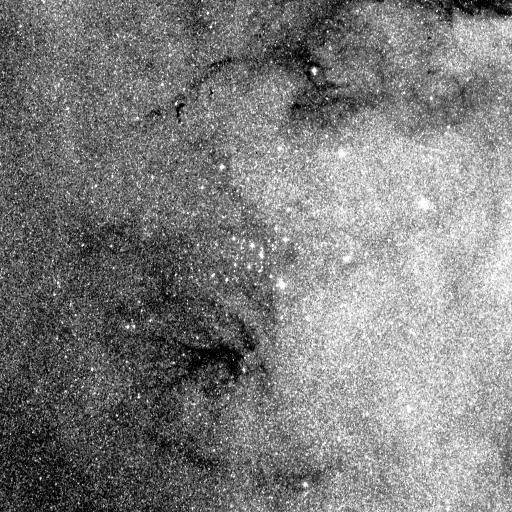
Recorded by Ptolemy, catalogued by Messier, and first light for the camera that later photographed Pluto.
Around AD 130, the Greek-Roman astronomer Ptolemy described a small nebula near the sting of the Scorpion. Telescopes reveal it as a scattering of bright stars: an open cluster about 200 million years old. In Chinese astronomy it was Yú, the Fish.
Before 1654, Giovanni Hodierna counted 30 stars in it. In 1764 Charles Messier made it the seventh entry in his list of comet-like objects, and it remains the southernmost object in his catalogue. Modern surveys suggest more than a thousand stars belong to it, spread over several degrees of sky and together weighing about 735 times as much as the Sun.
Ptolemy's Cluster (M 7) is 900 light-years away: the light we see from it set off around 1125, 70 years after Chinese astronomers recorded the supernova that made the Crab Nebula.
Did you know?
- First light for a Pluto camera. On 29 August 2006, the New Horizons spacecraft — then on its way to Pluto — took the first image with its LORRI telescope. The target was M 7.
- Too big for Hubble. As of 2022, M 7 was one of the few Messier objects Hubble had never photographed. Wide clusters like it would need thousands of pictures to cover with Hubble’s narrow view.
How big is it?
Born about 220 million years ago, when dinosaurs were rising and the supercontinent Pangaea was breaking apart. Light itself takes 21 years to cross it. Gaia has picked out 1,427 stars moving together through space as its members. That’s 4.9 times the distance from the Sun to the nearest star. Shrink our Solar System — the Sun and all eight planets — to the size of a coin, and Ptolemy's Cluster would be 529 m across (5 football pitches end to end); the nearest star would be a football pitch away, and the Milky Way 2,520 km across.
A large, brilliant open cluster near the Scorpion's tail, visible to the naked eye and recorded by Ptolemy around AD 130. It spans more than two full Moons, so binoculars or a wide-field eyepiece frame it best.
When and where to see it
It is best placed in the evening sky around July, when it crosses the meridian at about 10 pm local time (around midnight in June). It can be seen from everywhere south of 55°N and never sets south of 55°S.
At its highest it stands 5° up from 50°N, 20° up from 35°N, 55° up from the equator, 90° up from 35°S.
Facts
- Type
- Open cluster
- Constellation
- Scorpius
- Designations
- M 7, NGC 6475, Mel 183, Cr 354, Melotte 183, Collinder 354
- Magnitude
- 3.3
- Apparent size
- 1.3°
- Position
- RA 17h 53.9m, Dec −34° 48′ (J2000)
- Distance
- 900 light-years
- Discovered
- Ptolemy, 130, Recorded by Ptolemy around AD 130
Open AstroPilot to see when Ptolemy's Cluster (M 7) is highest tonight from your location, how easy it is with your telescope or binoculars, and an eyepiece view.