Wild Duck Cluster (M 11)
Wild Duck Cluster (M 11) is an open cluster in the constellation Scutum, magnitude 5.8, 14′ across.
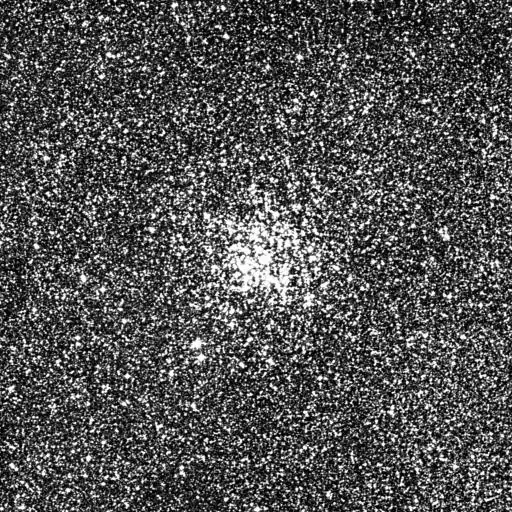
One of the most massive open clusters known — named for a flight of wild ducks.
Gottfried Kirch found this cluster in 1681, and Charles Messier added it to his catalogue in 1764. Its popular name comes from its brighter stars, which form a triangle like a flock of wild ducks in flight — or, from another angle, a single duck swimming.
As open clusters go, the Wild Duck is a heavyweight. Estimates of its mass range from 3,700 to 11,000 Suns, making it one of the most massive known, and it has been studied in great detail. At about 316 million years old, it still lies near its birthplace, close to the plane of the Milky Way.
Wild Duck Cluster (M 11) is 7,300 light-years away: the light we see from it set off around 5280 BC, around the time the first towns were growing in the Fertile Crescent.
Did you know?
- Sobieski’s Shield. Scutum, the Shield, was created in the 17th century to honour the Polish king John III Sobieski. In French, M 11 is still called the Amas de l’Écu de Sobieski — the cluster of Sobieski’s Shield.
- Seeded by a supernova?. Despite its youth, M 11 is rich in heavy elements, especially “alpha” elements such as oxygen and magnesium. One explanation is that a nearby supernova enriched the cloud it formed from.
How big is it?
Born about 310 million years ago, when the first plants and animals were moving onto land. Light itself takes 30 years to cross it. Gaia has picked out 1,911 stars moving together through space as its members. That’s 7 times the distance from the Sun to the nearest star. Shrink our Solar System — the Sun and all eight planets — to the size of a coin, and the Wild Duck Cluster would be 750 m across (7 football pitches end to end); the nearest star would be a football pitch away, and the Milky Way 2,520 km across.
One of the richest and most compact open clusters, with nearly 3,000 stars; the brightest form a V like a flight of ducks. A superb sight at medium power, set against the Scutum Star Cloud.
When and where to see it
It is best placed in the evening sky around August, when it crosses the meridian at about 10 pm local time (around midnight in July). It can be seen from everywhere south of 84°N and never sets south of 84°S.
At its highest it stands 34° up from 50°N, 49° up from 35°N, 84° up from the equator, 61° up from 35°S.
Facts
- Type
- Open cluster
- Constellation
- Scutum
- Designations
- M 11, NGC 6705, Amas de l'Ecu de Sobieski
- Magnitude
- 5.8
- Apparent size
- 14′
- Position
- RA 18h 51.1m, Dec −6° 16′ (J2000)
- Distance
- 7,300 light-years
- Discovered
- Gottfried Kirch, 1681
Open AstroPilot to see when Wild Duck Cluster (M 11) is highest tonight from your location, how easy it is with your telescope or binoculars, and an eyepiece view.