IC 418
IC 418 is a planetary nebula in the constellation Lepus, magnitude 9.4, 12″ across.
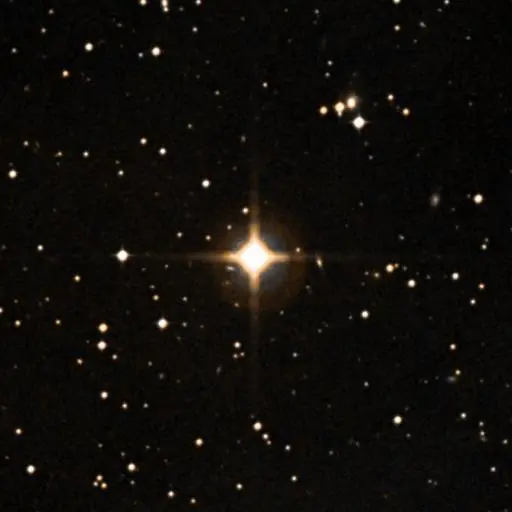
The Spirograph Nebula: a dying star’s shell, etched with a pattern like a child’s drawing toy.
A few thousand years ago, a red giant in Lepus shed its outer layers. Its exposed core, the hot star HD 35914, now floods that gas with ultraviolet light and makes it glow. That is IC 418, a planetary nebula. In Hubble’s famous portrait its shell is laced with fine, looping lines, like the patterns drawn with a Spirograph toy — which gave it its nickname. What carves that pattern is still unknown.
IC 418 is 4,700 light-years away: the light we see from it set off around 2680 BC, around the time the Great Pyramid of Giza was completed.
Did you know?
- Colour-coded gas. In colour images, red marks nitrogen, the coolest gas; green is hydrogen; and the traces of blue are oxygen, the hottest gas, closest to the star.
- Rings in time. Three faint concentric rings surround it, thrown off roughly 630 years apart — a record of the star’s repeated bouts of mass loss.
How big is it?
288 Solar Systems side by side. Light itself takes 3 months to cross it. Shrink our Solar System — the Sun and all eight planets — to the size of a coin, and IC 418 would be 6.9 m across (about the length of a car); the nearest star would be a football pitch away, and the Milky Way 2,520 km across.
A 9.4-magnitude planetary nebula in Lepus, about 12″ across. Its central star is magnitude 10.2.
When and where to see it
It is best placed in the evening sky around January, when it crosses the meridian at about 10 pm local time (around midnight in December). It can be seen from everywhere south of 77°N and never sets south of 77°S.
At its highest it stands 27° up from 50°N, 42° up from 35°N, 77° up from the equator, 68° up from 35°S.
Facts
- Type
- Planetary nebula
- Constellation
- Lepus
- Designations
- IC 418
- Magnitude
- 9.4
- Apparent size
- 12″
- Position
- RA 5h 27.5m, Dec −12° 42′ (J2000)
- Distance
- 4,700 light-years
- Discovered
- Williamina Fleming, 1891
Open AstroPilot to see when IC 418 is highest tonight from your location, how easy it is with your telescope or binoculars, and an eyepiece view.