IC 2165
IC 2165 is a planetary nebula in the constellation Canis Major, magnitude 10.5, 9″ across.
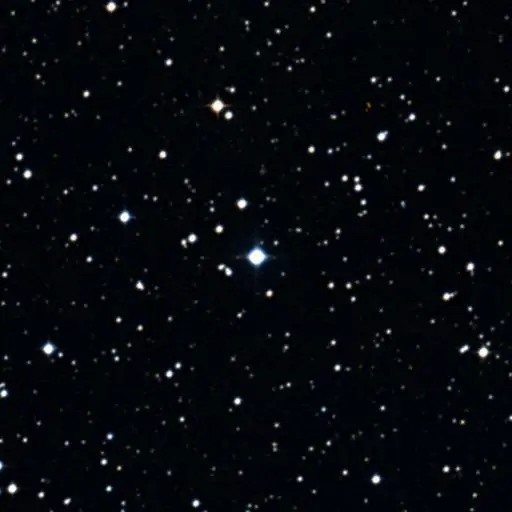
A small, bright planetary nebula in Canis Major: the cast-off shell of a dying star.
About five billion years from now, the Sun will swell into a red giant, shed its outer layers and leave a small, hot core behind. In IC 2165 that ending is already under way for another star. Its exposed core bathes the cast-off gas in ultraviolet light and makes it glow. Despite the name, a planetary nebula has nothing to do with planets: William Herschel coined the term because many of these small round glows reminded him of a planet’s disc.
IC 2165 is 12,000 light-years away: the light we see from it set off about 12,000 years ago, when the last Ice Age was ending.
How big is it?
551 Solar Systems side by side. Light itself takes 6 months to cross it. Shrink our Solar System — the Sun and all eight planets — to the size of a coin, and IC 2165 would be 13.2 m across (about the length of a bus); the nearest star would be a football pitch away, and the Milky Way 2,520 km across.
A 10.5-magnitude planetary nebula in Canis Major, about 9″ across. Its central star is magnitude 17.9.
When and where to see it
It is best placed in the evening sky around January, when it crosses the meridian at about 10 pm local time (around midnight in December). It can be seen from everywhere south of 77°N and never sets south of 77°S.
At its highest it stands 27° up from 50°N, 42° up from 35°N, 77° up from the equator, 68° up from 35°S.
Facts
- Type
- Planetary nebula
- Constellation
- Canis Major
- Designations
- IC 2165
- Magnitude
- 10.5
- Apparent size
- 9″
- Position
- RA 6h 21.7m, Dec −12° 59′ (J2000)
- Distance
- 12,000 light-years
Open AstroPilot to see when IC 2165 is highest tonight from your location, how easy it is with your telescope or binoculars, and an eyepiece view.